

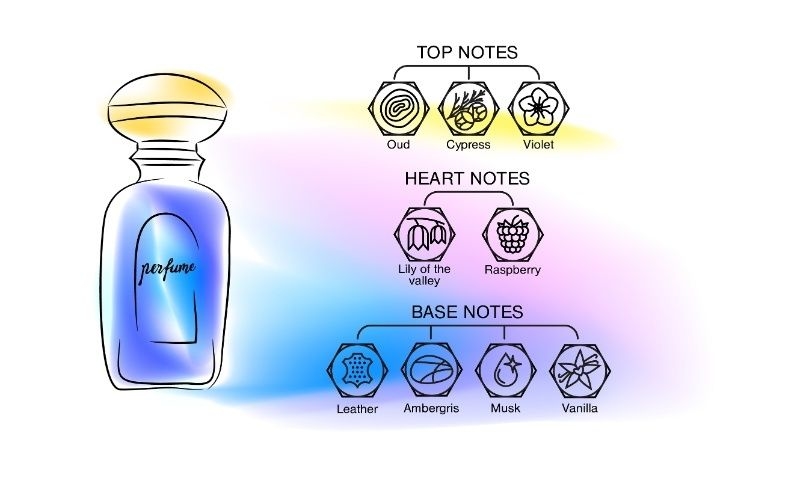
Most beginners assume a perfume smells the same from the first spray until it fades. That would make things easier, but that is not how fragrance really works. Perfume changes in stages, and that shifting experience is exactly what makes it interesting. A scent can open bright and citrusy, soften into florals or spices, and then settle into something warmer, smoother, and deeper hours later. That evolution is what people are noticing when they say a perfume “develops” on the skin.
This is why a basic perfume notes guide can be so useful. It helps people understand what they are smelling and why a fragrance that seemed sharp at first can later feel soft, woody, creamy, or sweet. Without that knowledge, it is easy to judge a perfume too quickly or buy one for the opening alone and then feel confused when it changes.
Learning notes is not about becoming overly technical. It is about making fragrance feel less random. Once someone understands the structure behind a scent, shopping becomes easier, testing becomes more enjoyable, and personal taste starts to make more sense.
Perfume is usually described in three layers: top notes, heart notes, and base notes. These layers do not exist as three separate perfumes stacked on top of each other. They blend and overlap, but they tend to appear in a rough sequence as the fragrance dries down on skin.
That is the simplest version of fragrance notes explained. Some ingredients are lighter and more volatile, so they are noticed first. Others take longer to emerge. Some stay close to the skin for hours and become the memory people carry of the scent later in the day.
The three stages usually work like this:
Once a person understands that pattern, perfume starts to feel much less mysterious. It also becomes easier to tell whether a fragrance is not right for them or whether it simply needs more time to settle.
Top notes are the opening of a fragrance. They are what someone smells first, usually in the first few minutes after spraying. These notes are often light, fresh, bright, or sparkling. Citrus, herbs, green notes, and airy fruits are common here because they create an immediate impact.
Top notes matter because first impressions matter. A perfume that opens beautifully can feel uplifting, clean, sharp, juicy, or elegant right away. Still, the top is not the whole story. Many people fall in love with a fragrance’s opening and forget to wait for what comes next.
Common top notes often include:
This is one reason top heart base notes are discussed so often in fragrance circles. The opening may be what draws attention, but it is only the beginning of the experience. Judging a perfume in the first ten seconds is a bit like judging a movie from the opening scene alone.
Once the top notes begin to fade, the heart notes start to show more clearly. These are often called the middle notes, and they usually form the main identity of the fragrance. If the top notes are the greeting, the heart notes are the conversation that follows.
Heart notes can be floral, spicy, fruity, aromatic, or even slightly creamy depending on the formula. Rose, jasmine, orange blossom, cinnamon, cardamom, violet, and many soft fruits often appear here. This stage tends to last longer than the opening, which is why it matters so much when choosing a scent.
For many wearers, the heart is where how perfume works begins to make practical sense. A person may think they love fresh citrus scents, but if most of those perfumes dry down into a floral heart they do not enjoy, that pattern explains a lot. Understanding the middle stage helps people shop with more confidence because they stop focusing only on the first spray.
Base notes are the final stage of a perfume’s development. These are the ingredients that tend to linger the longest and create depth, warmth, and softness as the fragrance settles into the skin. They often appear later, but they can quietly support the fragrance from the beginning too.
Common base notes include:
These notes often feel richer, smoother, and heavier than the opening. That is why base notes are so important in a proper perfume education. They shape the dry down, and the dry down is often the part people live with the longest. A perfume may open bright and playful, then become creamy and woody after an hour. If the base feels too heavy, powdery, smoky, or sweet for someone’s taste, the fragrance may not be a good match even if the opening was lovely.
On a Similar Note: Understanding the Layers of Perfume with Fragrance Pyramid
One of the most confusing parts of fragrance for beginners is that the same perfume can smell wonderful on one person and completely different on another. That is normal. Skin chemistry, body temperature, weather, and even how moisturized the skin is can affect how a scent unfolds.
This is where fragrance notes explained becomes more useful than memorizing random perfume names. Once people understand that perfume changes with skin and environment, they stop expecting every scent to behave in an identical way. The perfume itself stays the same, but the wearing experience can shift.
A few things that can influence performance include:
That is why testing perfume on paper only tells part of the story. Paper strips help reveal the general structure, but skin shows how the scent actually lives.
Beginners often rush perfume testing. They spray three or four scents quickly, smell them all at once, and then wonder why everything starts blending together. Fragrance needs a little patience. A better test gives each scent time to move through its stages.
A simple way to test perfume well is to:
This approach teaches people to notice top heart base notes instead of only reacting to the opening burst. It also prevents disappointment later. A perfume that seems average at first may become beautiful after half an hour, while one that starts out exciting may dry down into something flat or overly sweet.
Learning notes gets even easier when people connect them to fragrance families. Fresh scents often lean on citrus, herbs, marine notes, or green elements. Floral perfumes may center around rose, jasmine, peony, iris, or orange blossom. Woody scents often involve cedar, sandalwood, or vetiver. Gourmand styles use edible notes like vanilla, caramel, coffee, or tonka.
Understanding these families helps with how perfume works because it turns scent into recognizable patterns instead of random descriptions. Someone who enjoys warm, creamy perfumes may discover they like amber, vanilla, and sandalwood bases. Someone who prefers light daytime scents may be drawn to bergamot, neroli, and soft musks.
The more a person notices these patterns, the easier fragrance shopping becomes. Taste starts to feel less vague and more personal.
Layering can sound intimidating, but it really starts with simple awareness. It means combining scented products in a way that feels balanced instead of chaotic. A vanilla body lotion under a woody perfume, for example, may add warmth. A strong floral cream under an already floral fragrance may push the scent too far.
That is why scent layering basics matter. People are often layering already without thinking about it through body wash, lotion, hair products, and perfume. Learning to notice those combinations helps avoid clashes and makes fragrance feel more intentional.
A few safe layering ideas include:
Layering should support the perfume, not overpower it. Beginners usually do best when they keep things minimal and learn how one scent behaves before adding another.
Check Out: Burberry Perfumes with Long-Lasting Fragrance Power Plus
Many people buy perfume based on packaging, hype, or one quick spray at a counter. That can work sometimes, but it often leads to shelves full of bottles that felt exciting in the moment and then became hard to wear later. A little perfume education helps prevent that.
When someone understands notes, they ask better questions. They stop saying only “I want something nice” and start noticing whether they prefer bright openings, floral hearts, or smooth woody bases. They become more selective in a good way. They know why certain perfumes keep disappointing them and why others feel instantly right.
That is the real value of a perfume notes guide. It does not turn fragrance into homework. It turns it into a more enjoyable experience. It gives people language for their taste and helps them choose scents with more confidence and less guesswork.
It helps to wait at least an hour, and sometimes longer, before making a final decision. The opening can be attractive but short-lived, while the real personality of the scent often appears in the middle and base stages. Some perfumes become softer, warmer, or sweeter as they settle. Others lose their initial charm. Giving the fragrance proper time usually leads to a much better judgment than reacting to the first minute alone.
Both can work, but they create slightly different experiences. Skin usually shows the full development of the perfume more clearly because body heat helps the notes unfold. Clothes can help a scent last longer and may hold onto the top and middle notes differently. Many people use both depending on the fragrance. Still, skin is usually the better place to test a perfume if the goal is to understand how it really wears.
Perfume descriptions often use note lists and storytelling language to create a mood, but that does not always match how a scent feels in real life. A fragrance may list rose, amber, and musk, yet still come across as clean, powdery, or even fruity depending on the blend. Notes are helpful clues, not exact promises. The formula, concentration, and balance between ingredients all change how the perfume is actually experienced.
This content was created by AI